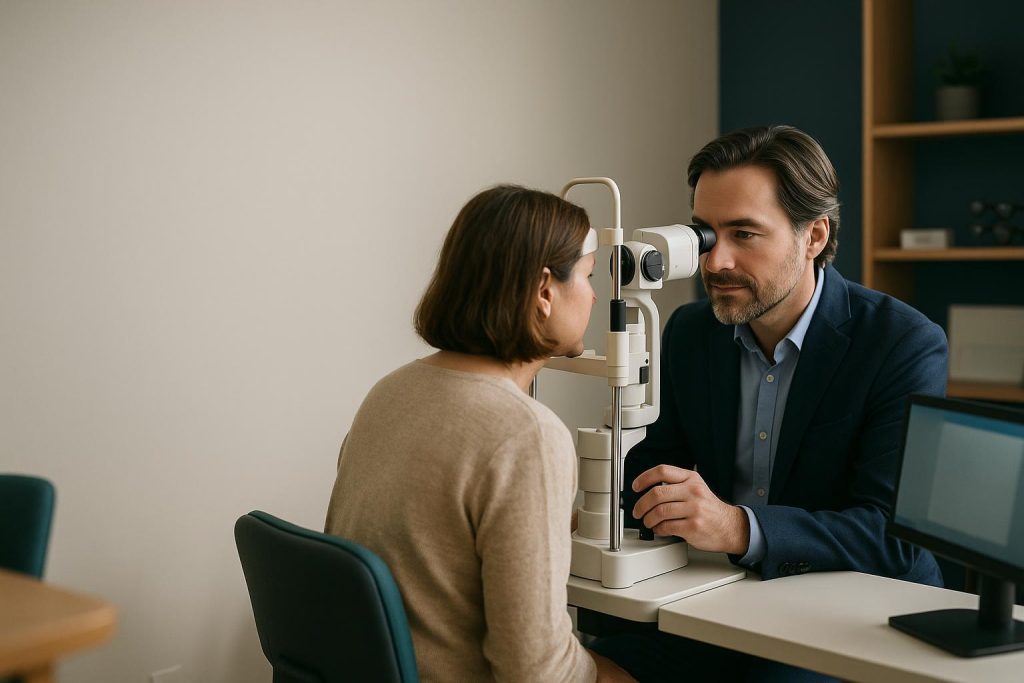
Ocular Health Management as Part of Complete, Personalized Eye Care
Managing an eye condition is not separate from routine vision care. It is an important part of protecting your sight over time. At Louie Eyecare Centre, comprehensive eye care brings together preventative eye exams, cutting-edge diagnostics, personalized treatment planning, and practical guidance for daily life. This approach helps us look beyond whether you can see clearly today and focus on the health of your eyes for the future.
Some ocular conditions develop slowly and may not cause noticeable symptoms in their early stages. Others can affect comfort, vision quality, or eye function more quickly. During a thorough eye exam, our optometrists assess your vision and examine key parts of the eye. When needed, they use detailed testing to monitor changes, guide treatment, and determine when a referral to an ophthalmologist or another health-care provider is appropriate.
For Edmonton patients and families, this means you can receive ongoing, community-focused care in one familiar setting. Our team takes time to explain findings in clear language, answer questions, and create a plan that fits your health needs, work, school, hobbies, and visual demands.
Why ocular condition management matters
Good vision is important, but it does not always tell the full story about eye health. Many serious conditions can progress without pain or obvious changes in sight. Regular monitoring gives your optometrist a baseline for comparison and may help identify subtle changes early.
Ocular condition management may involve one visit, periodic follow-up testing, lifestyle guidance, prescribed treatment, specialty contact lenses, or coordinated care with other providers. The right plan depends on the condition, its stage, your overall health, and how your eyes respond over time. Personalized care is essential because no two patients have the same risks, symptoms, or visual goals.
A comprehensive eye exam is often the starting point. It allows us to evaluate vision, eye pressure, the front and back of the eye, and other factors that can point to an ocular health concern. It also gives you a chance to discuss changes such as headaches, glare, floaters, blurry vision, dryness, redness, difficulty with night driving, or a family history of eye disease.
Conditions we help detect and manage
Our optometrists provide ongoing assessment and management for many common eye health concerns. The services recommended will always be based on your individual examination results.
- Glaucoma: Glaucoma is a group of conditions that can damage the optic nerve. It often has few early symptoms, which is why regular eye pressure checks and optic nerve assessment are so important. If glaucoma is suspected or diagnosed, follow-up testing can help track changes and support timely treatment or referral.
- Diabetic eye disease: Diabetes can affect the small blood vessels in the retina, the light-sensitive tissue at the back of the eye. Retinal assessments and recommended follow-up intervals are an important part of protecting eye health for people living with diabetes.
- Keratoconus and corneal changes: Keratoconus changes the shape of the cornea and can cause blurred or distorted vision, glare, and frequent prescription changes. Corneal imaging and careful monitoring can help identify progression. Some patients may benefit from specialty contact lens options designed for clearer, more stable vision.
- Dry eye disease: Dry eye can cause burning, grittiness, fluctuating vision, excessive tearing, and contact lens discomfort. It may be linked to tear-film imbalance, meibomian gland dysfunction, screen use, medications, or environmental factors. Our dry eye treatment options are tailored to the cause and severity of your symptoms.
- Age-related eye conditions: Cataracts, macular degeneration, and other age-related changes can affect visual clarity and independence. Regular monitoring helps identify changes and supports appropriate referral when needed.
- Myopia and other refractive changes: Changes in nearsightedness, farsightedness, astigmatism, or reading vision may affect daily comfort and function. Eye exams assess both the prescription and the health of the eye behind it.
Not every eye concern is chronic. Redness, pain, light sensitivity, an injury, a sudden increase in floaters, flashes of light, or sudden vision changes may need prompt attention. If you have an urgent concern, an emergency eye exam can help determine the next appropriate step. Sudden loss of vision or severe eye pain should be treated as urgent.
How advanced diagnostic testing supports better decisions
Modern eye care relies on more than a standard vision chart. At Louie Eyecare Centre, cutting-edge diagnostics help create a detailed picture of ocular health and make it easier to compare results from one visit to the next. This information supports preventative care and informed decision-making.
Depending on your needs, testing may include retinal imaging, optical coherence tomography (OCT), eye pressure measurement, visual field testing, and corneal topography. These tools can help our optometrists evaluate the retina, optic nerve, cornea, and other structures that are not fully assessed by checking a glasses prescription alone.
For example, retinal imaging can document the appearance of the back of the eye, while OCT produces detailed cross-sectional images that may help assess retinal layers and optic nerve tissue. Corneal topography maps the surface shape of the cornea and is especially useful when evaluating keratoconus or planning specialty lens care. Results are interpreted alongside your symptoms, medical history, family history, and full clinical examination.
Your care plan is built around your life
When an ocular condition is found or suspected, our role is to help you understand what it may mean and what comes next. We avoid a one-size-fits-all approach. Your care plan may include monitoring at a specific interval, advice on symptom management, treatment recommendations, prescription updates, or referral for further medical assessment.
We also consider how eye health affects your day-to-day routine. A student may need help with screen-related dry eye and visual endurance. A driver may be concerned about glare and night vision. A patient with diabetes may need regular retinal monitoring. Someone with a complex prescription or irregular cornea may require more specialized vision correction.
Where contact lenses are appropriate, a dedicated contact lens evaluation can assess fit, comfort, vision, and ocular health. This is particularly valuable for patients with astigmatism, dry eye concerns, or keratoconus. Proper follow-up matters because a lens that feels acceptable is not always the same as a lens that supports healthy long-term wear.
Preventative care for every stage of life
Eye health needs change with age, but preventative care matters throughout life. Children benefit from exams that assess visual development, eye coordination, and eye health. Adults may need monitoring for work-related visual strain, contact lens needs, systemic health conditions, and early signs of ocular disease. Older adults often benefit from closer monitoring for glaucoma, cataracts, diabetic eye disease, and macular changes.
Louie Eyecare Centre offers age-appropriate visits, including children’s eye exams, adult eye exams, and senior eye exams. These appointments give our team the opportunity to check for changes that may be easy to miss at home, even when your current glasses or contact lenses seem to be working well.
Working with your broader health-care team
Comprehensive eye care is collaborative. Some ocular conditions are connected to whole-body health, including diabetes, high blood pressure, autoimmune disease, or medication use. With your needs in mind, we may recommend communication with your family physician, pharmacist, ophthalmologist, or another specialist. Referral does not end your relationship with your optometrist; it helps ensure you receive the right level of care at the right time.
We can continue to support your ongoing vision needs, monitor relevant findings when appropriate, and help you understand how treatment recommendations may affect your glasses, contact lenses, comfort, and daily activities.
When should you book an eye exam?
Book an appointment if you are due for routine care, have a family history of glaucoma or macular degeneration, live with diabetes, notice recurring dryness or blurred vision, or have concerns about a change in your eyes. It is also wise to schedule an exam if you have frequent prescription changes, trouble seeing at night, eye fatigue, or reduced contact lens comfort.
Early assessment does not mean assuming the worst. It means giving your eyes the attention they deserve and creating a reliable baseline for future care. With over 25 years serving the Edmonton community, Louie Eyecare Centre combines a warm, welcoming experience with advanced diagnostic care and practical guidance. Your vision, comfort, and long-term eye health remain at the centre of every recommendation.
To take a proactive step toward healthy vision, book your eye exam today. Our team can help you understand your ocular health, discuss any symptoms or risk factors, and build a care plan that supports clear, comfortable vision now and in the years ahead.